
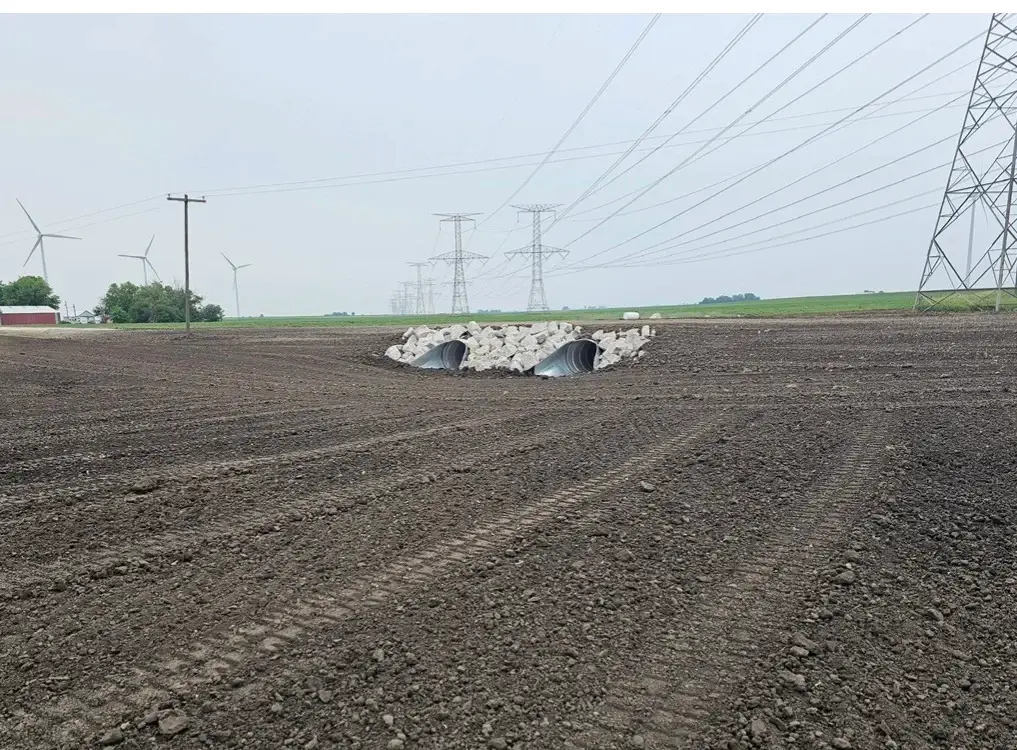
Drainage Improvements for Yards, Lots and Foundations
Standing water, a persistently wet area or moisture collecting near a structure calls for more than a guess. Salz Drainage and Excavating evaluates the area you want to improve and discusses practical drainage work for residential, private and commercial properties.
Start With Where the Water Is—and Where It Can Go
Drainage work is about controlling a path. The visible wet spot matters, but so do the surrounding grades, the place water appears to enter and the area where it can be directed. Before choosing a drain type, identify when the problem happens, how long water remains and what part of the property needs protection or better use. A French drain, buried tile or grading-related solution should respond to those conditions rather than being installed simply because it is familiar. Salz begins the conversation with the property and the result you need.
When drainage work requires opening ground, our excavation services may be part of the scope; agricultural properties may also need agricultural drainage.
Available Drainage Improvements Work
Drainage improvement services include French drain installation, drain tile systems, basement and foundation drainage, and yard and lot drainage. The exact combination depends on the property and requested result. Each item is discussed as a scope, not a promise that every method fits every site.
- French drain installation
- Drain tile systems
- Basement and foundation drainage
- Yard and lot drainage
French Drains for Recurring Wet Areas
A French drain uses a stone-filled trench and perforated pipe to intercept and carry subsurface water. It may fit a soggy run through a yard, a low edge of a lot or another area where water repeatedly collects below the surface. Placement, fall, outlet and surrounding grades all matter. A drain without a workable discharge point cannot do useful work. During planning, we discuss the affected area, where the line may run, what obstacles are present and how the disturbed ground should be left after installation.
Drain Tile Systems
Drain tile provides a buried route for water across or away from an affected area. New installation may be considered where a defined line can improve drainage, while existing systems may need their layout and condition understood before changes are made. The phrase “drain tile” can refer to different applications, so tell us whether the concern involves a yard, foundation, lot or agricultural ground. Salz also provides a separate agricultural drainage service for field tile work. Keeping the use clear helps define the right scope and avoids treating every buried drainage line as the same project.
Basement and Foundation Drainage
Water near a basement or foundation deserves careful planning because excavation and drainage changes can affect the area immediately around a structure. Useful project information includes where moisture appears, whether the concern is inside or outside, when it is most noticeable and whether prior drainage work is present. Salz offers basement and foundation drainage as an earthwork and drainage service, but does not promise a diagnosis from a phone call. The estimate should establish what can be observed, what access exists and which portion of the water-management work is actually being proposed.
Yard and Lot Drainage
A wet yard can limit mowing, play space, access and future use. Lot drainage concerns can also affect planned improvements or the way runoff moves through open ground. Practical solutions may involve a collection route, buried drainage, reshaping or a combination, depending on the site. The goal is not to move a problem a few feet or send water somewhere it should not go. Describe the pattern, the area you need usable and any known lines or prior work. Those details support a more focused site conversation.
Planning the Work and the Finish
Drainage installation disturbs ground. Access for excavation, removed material, backfill, surface restoration and the intended outlet should be discussed before work begins. It is also important to identify known private features and utility concerns. Salz keeps trenching claims conservative and defines the earthwork scope rather than implying responsibility for every utility or code-related task. Once the drainage plan is clear, the estimate can address the agreed work. Free estimates are available for properties around Magnolia and surrounding areas.
Questions That Make a Drainage Estimate More Useful
Before the estimate, note whether water appears during rain, after rain or for longer periods; whether it enters a structure or remains outside; and which part of the property you need to protect or use. Photos taken while the problem is active can communicate more than a dry-day description. Also mention prior drains, buried outlets and changes made to nearby grades. These observations do not replace a site review, but they help separate a recurring pattern from a one-time condition and keep the discussion centered on the right area.